
Specialized Healthcare Housekeeping
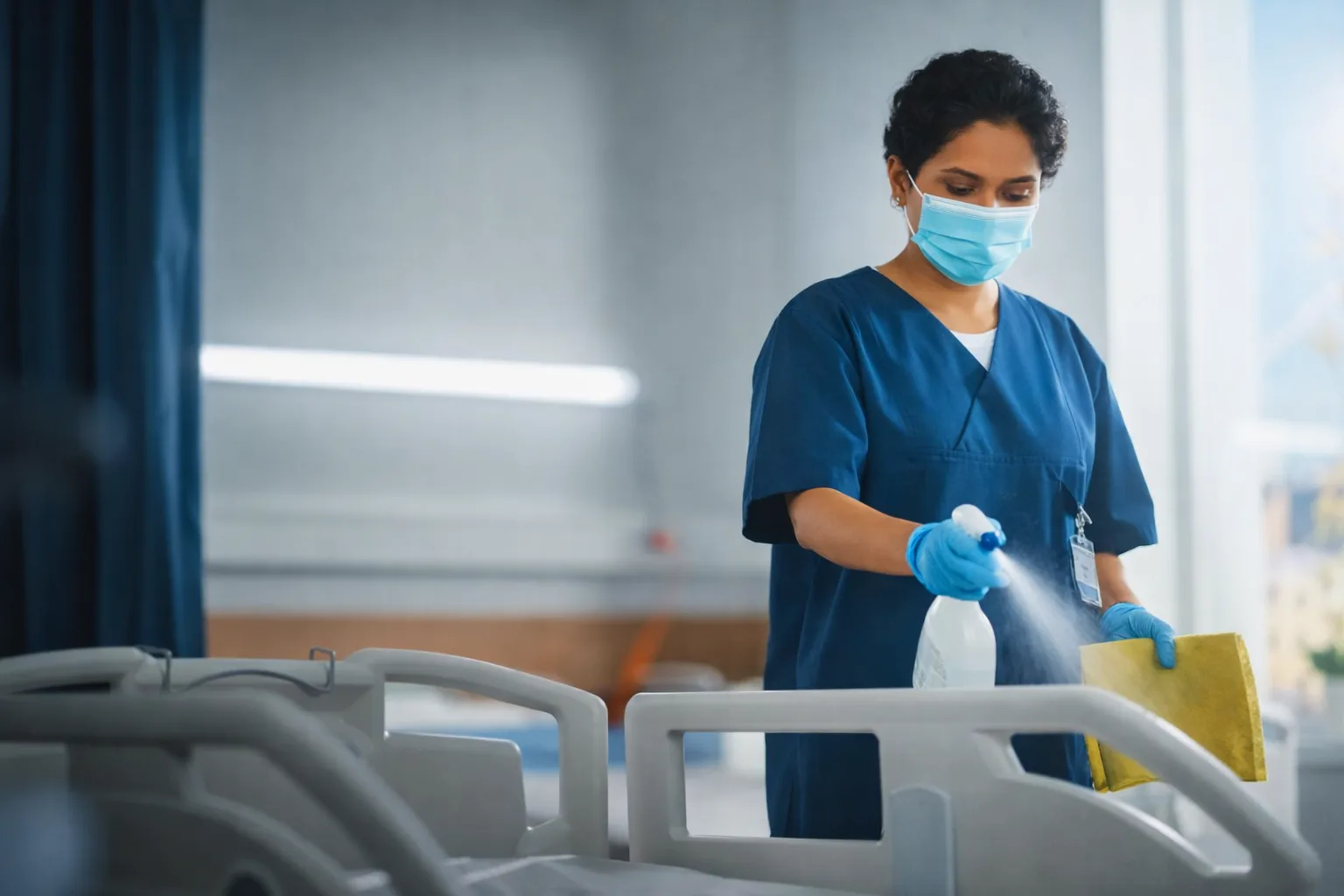
Specialized healthcare housekeeping is no longer just about cleanliness—it is about patient safety, infection prevention, regulatory compliance, and brand trust. In modern hospitals, clinics, and diagnostic centers, housekeeping functions as a frontline clinical support system. A well-maintained clinical environment directly reduces hospital-acquired infections (HAIs), improves patient outcomes, and strengthens accreditation readiness.
This page outlines a fully compliant, healthcare-grade housekeeping framework, designed for hospitals, surgical centers, ICUs, laboratories, and multi-specialty healthcare facilities.
Clinical Environment Care
Clinical environments demand medical-grade cleaning, not conventional janitorial services. Every surface—floors, walls, furniture, high-touch points, and equipment zones—must be cleaned using hospital-approved disinfectants with defined dwell times.
Housekeeping teams follow zone-based cleaning protocols that separate low-risk, medium-risk, and high-risk areas. Color-coded tools, surface-specific chemicals, and documented checklists ensure cross-contamination is avoided. The result is a visibly clean, clinically safe environment that supports doctors, nurses, and patients without disruption.
OT (Operation Theater) & ICU Sterilization
Operation Theaters and ICUs are zero-error zones. Cleaning here is aligned with aseptic standards, airflow control requirements, and strict turnaround timelines.
Protocols include:
- Pre-operative and post-operative OT cleaning
- Terminal cleaning between procedures
- ICU bed-zone disinfection
- High-touch medical equipment surface sanitization
Only non-residue, hospital-grade disinfectants are used. Trained teams work in coordination with nursing and biomedical departments to maintain sterile integrity without interrupting clinical workflows.
Inpatient Ward & Diagnostic Area Cleaning
Inpatient wards, imaging rooms, laboratories, and diagnostic zones require continuous hygiene maintenance due to high patient movement and equipment usage.
Services include:
- Scheduled ward cleaning (morning, afternoon, night cycles)
- Patient bed turnover cleaning
- Diagnostic equipment area sanitation
- Washroom and isolation room disinfection
The focus is not just appearance, but pathogen load reduction, odor control, and patient comfort—because recovery environments matter.
Infection Control Protocols
Infection control is the backbone of healthcare housekeeping. Services are structured around standard precautions and transmission-based precautions.
Core practices include:
- Hand hygiene compliance monitoring
- Surface disinfection mapping
- Spill management (blood/body fluids)
- Isolation room cleaning protocols
Cleaning methods are aligned with hospital infection control committee (HICC) guidelines. Data logs, audits, and incident reports ensure accountability. This approach significantly lowers the risk of HAIs such as MRSA, VRE, and C. difficile.
Compliance Services
Healthcare facilities operate under constant regulatory scrutiny. Housekeeping services must support statutory, safety, and quality audits without last-minute fixes.
Compliance support covers:
- Daily, weekly, and monthly cleaning records
- Chemical usage documentation
- Staff vaccination and health records
- Training and competency logs
This structured documentation ensures readiness for inspections, surprise audits, and internal quality reviews—no shortcuts, no panic mode.
Biomedical Waste Segregation & Handling
Improper biomedical waste handling is a major compliance and safety risk. Housekeeping teams are trained in source-level waste segregation, aligned with national biomedical waste rules.
Services include:
- Color-coded waste segregation
- Safe internal waste transport
- Sharps handling and spill response
- Temporary storage area hygiene
Strict adherence prevents occupational hazards, environmental contamination, and legal exposure. Waste is handled safely, ethically, and responsibly.
NABH / Hospital Standards Compliance Support
Accreditation is not a one-time task—it is a continuous discipline. Housekeeping services are designed to actively support NABH and hospital quality standards.
Support includes:
- SOP alignment with accreditation manuals
- Mock audits and gap identification
- Staff retraining based on audit feedback
- Continuous quality improvement tracking
This proactive model ensures facilities remain audit-ready throughout the year, not just during accreditation cycles.
Trained Healthcare Manpower
People matter more than products. Housekeeping personnel are trained specifically for healthcare environments, not generic cleaning roles.
Training covers:
- Infection control basics
- Chemical handling and safety
- OT/ICU behavior protocols
- Patient interaction and confidentiality
Staff are uniformed, supervised, vaccinated, and periodically re-trained. The outcome is a professional team that blends seamlessly into hospital culture while delivering measurable hygiene outcomes.
Why Specialized Healthcare Housekeeping Matters
Healthcare housekeeping is a clinical risk management function, not a support add-on. Facilities that invest in specialized services see:
- Lower infection rates
- Better patient satisfaction scores
- Faster accreditation success
- Stronger institutional reputation
In short, clean hospitals are not optional—they are non-negotiable.
Frequently Asked Questions
Healthcare housekeeping follows medical-grade protocols focused on infection control, not just visual cleanliness. It uses hospital-approved disinfectants, zone-based cleaning, trained manpower, and documented processes aligned with clinical risk management. Regular cleaning lacks the expertise, compliance structure, and safety controls required in healthcare environments.
Specialized housekeeping targets high-touch surfaces, patient zones, and critical areas using evidence-based disinfection methods. Strict protocols, trained staff, and audit-backed processes significantly reduce pathogen spread, thereby lowering the risk of HAIs and improving overall patient safety and clinical outcomes.
Yes. Healthcare housekeeping directly supports accreditation through SOP compliance, documentation, staff training, mock audits, and continuous quality improvement. A strong housekeeping system ensures hospitals remain audit-ready year-round and meet required national healthcare quality standards without last-minute corrective actions.
Related Blogs
Ready to Transform Your Facility?
Let our experts assess your facility and provide a customized management solution